CECOZ
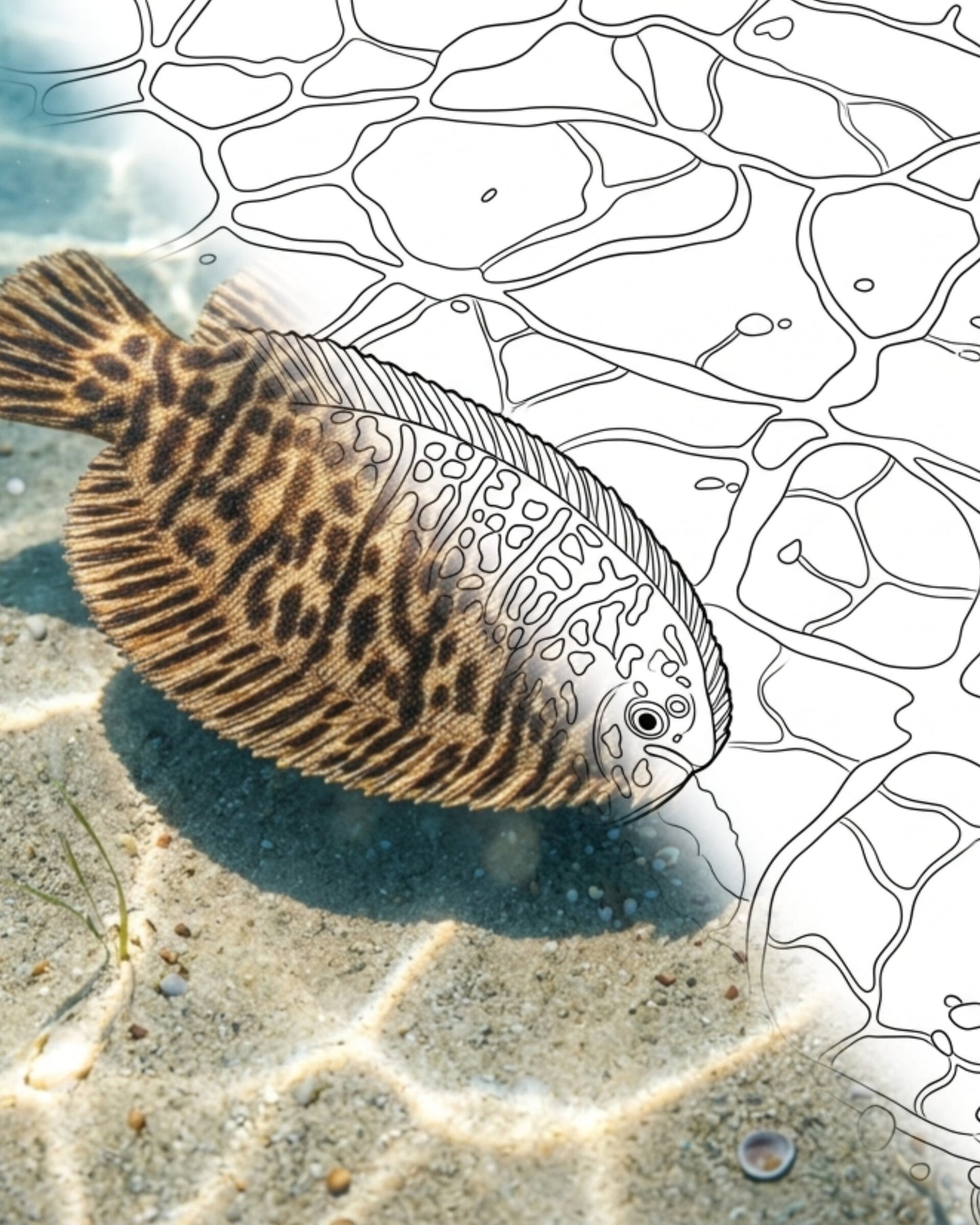
Hogchoker (Trinectes maculatus) | Marine Explorer Coloring Kit
Hogchoker (Trinectes maculatus) | Marine Explorer Coloring Kit
Couldn't load pickup availability
Discover one of the most unusual and ecologically flexible flatfishes of the Western Atlantic coastal world. The Hogchoker, scientifically known as Trinectes maculatus, is a distinctive member of the Achiridae family — a small, bottom-dwelling American sole recognized for its oval flattened body, rough textured scales, cryptic brown patterning, and remarkable ability to live across marine, brackish, and even freshwater-connected habitats.
The body of Trinectes maculatus is broad, oval, and strongly flattened, showing the specialized flatfish form that makes soles and flounders so different from typical reef fishes. Its upper surface is usually brown to dark brown, marked with irregular blotches, fine cross-lines, rough scale texture, and subtle mottling that helps it disappear against mud, sand, and estuarine bottom surfaces. This camouflage is not just visual decoration — it is the core survival strategy of a fish built to remain almost invisible on the seafloor.
Unlike colorful reef fishes that swim upright through coral branches, the Hogchoker lives pressed close to the bottom. Both eyes are positioned on the visible upper side of the body, allowing the fish to lie flat while still monitoring the water above. Its small mouth, rounded body outline, and continuous dorsal and anal fins reflect a quiet benthic lifestyle based on concealment, slow movement, and close contact with soft-bottom habitats.
One of the most important educational features of this species is its habitat flexibility. Trinectes maculatus is not restricted to normal marine reef conditions. It is strongly associated with estuaries and coastal waters, but it can also move into freshwater systems and may travel far upstream. This makes it an excellent subject for understanding the connection between marine environments, brackish estuaries, river systems, and coastal fish migration.
The Hogchoker feeds mainly on small bottom-dwelling prey such as worms, small crustaceans, and other benthic invertebrates. Its feeding behavior reflects a patient bottom-hunter strategy rather than an active open-water pursuit style. It waits close to the substrate, using camouflage and position to access small prey living in or above muddy and sandy bottoms.
This species is especially valuable as an educational coloring subject because it demonstrates a very different marine body plan from the bright reef fishes commonly seen in aquariums. Learners can explore flatfish asymmetry, bottom camouflage, estuarine ecology, soft-substrate adaptation, and the quiet hidden biodiversity of coastal habitats through one compact but scientifically fascinating fish.
The original visual reference includes a question mark after Trinectes maculatus, so this product uses the identification carefully while retaining the accepted scientific name. The morphology, flat sole-like body, Western Atlantic range reference, and aquarium data all support presenting it as Trinectes maculatus for this CECOZ educational profile.
Developed using real marine reference observations and scientific classification standards.
Common Name: Hogchoker
Scientific Name: Trinectes maculatus
Origin / Habitat: Western Atlantic. Found in coastal waters, estuaries, muddy bottoms, sandy bottoms, soft-bottom habitats, and freshwater-connected river systems.
[Exclusive Educational Content Included]
This educational coloring kit combines marine science with clean line art, helping learners and collectors explore the oval flatfish body form, rough scale texture, benthic camouflage, estuarine habitat flexibility, bottom-dwelling behavior, and small invertebrate-feeding lifestyle of this Western Atlantic Hogchoker through a creative hands-on experience.
Best for: hobbyists, educators, marine artists, flatfish learners, estuary-life learners, and reference collectors.
Note: Full biological profile data including habitat, diet, size, temperature, salinity, and aquarium-reference parameters is included in the Digital Infographic Card inside your download folder.
Formats included: High-resolution printable coloring page (A4 PDF) + Scientific Infographic Card.
Part of the growing CECOZ Marine Explorer Series — collect and build your personal marine library.